


Story Content
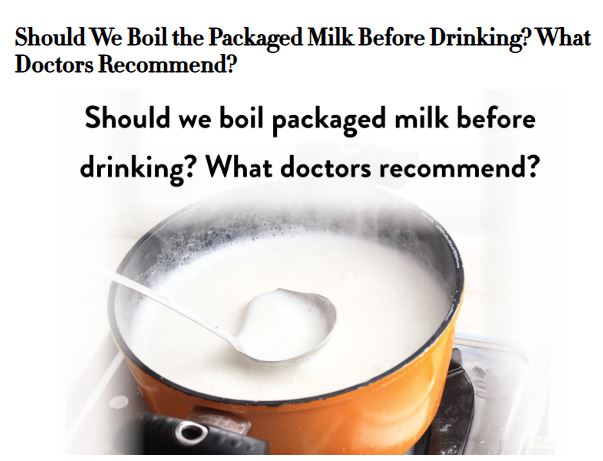
In India, it is a household tradition of boiling milk before it is taken and the practice has been passed on through the generations. However, since the majority of packaged milk such as Amul, Mother Dairy or such others are already pasteurized, the question arises: Do we really have to boil them in a 5-minute process, or does pasteurization really make the milk safer?
Pasteurization is a process that heats milk to approximately 72o C in 15 seconds (or other high-temperature short-Time processes) to eliminate the ill-effects of food pathogens such as E. coli, Salmonella, Listeria, and Campylobacter. The pasteurized milk in the packaged form becomes microbiologically safe to be consumed directly when it is packed in the cold chain (stored at temperatures of below 4 o C). According to the sources such as FDA, FSSAI guidelines, and Indian dietitians, there is no necessity to boil more when using well-handled, unopened pasteurized milk.
Nevertheless, recent scandals like viral news of test results of high coliform bacteria in certain samples of the pouch milk have revived the debate. Coliforms reveal the possibility of fecal or lack of hygiene in processing/ transportation. In case of the cold chain failure (during delivery, at shops, or at home), the remaining bacteria may multiply. Very in this case, boiling is also advised by experts.
Milk containing a majority of the vegetative bacteria such as the coliforms is destroyed by boiling of milk at 100C for approximately 5 minutes after initial rise which will offer us a secondary level of safety. According to food safety reports this greatly minimises bacterial risk in pouch milk. It does not remove chemical contaminants (such as urea or detergents) or render the milk sterile, but it will deal with issues of microbes successfully.
On the other hand, in-depth boiling (more than a couple of minutes) may cause destruction of heat-sensitive ingredients such as vitamins B12, B6, C, and certain proteins, change flavor, and create a more solid creamy layer. During their day-to-day use in tea/coffee, many nutritionists recommend against full boiling and instead, gentle warming (as in lukewarm) which does not destroy nutrition.
To sum up the Indian families:
- When the milk is sufficiently refrigerated, closed, not out of date but belongs to a reputable brand, then it is safe without the boiling (or simply warm it).
- In case of uncertainty over storage, spoiled packet, or recent contamination cases, boil 4-5 minutes, this is a safe practice.
- Never use products without examining their expiry, scent and appearance.
There is nothing wrong about boiling in 5 minutes and it brings relief of mind to many especially in Uttar Pradesh where pouch milk is typical. However it is rather precaution than necessity that well pasteurized milk.


Comments
Add a Comment:
No comments available.