


Story Content
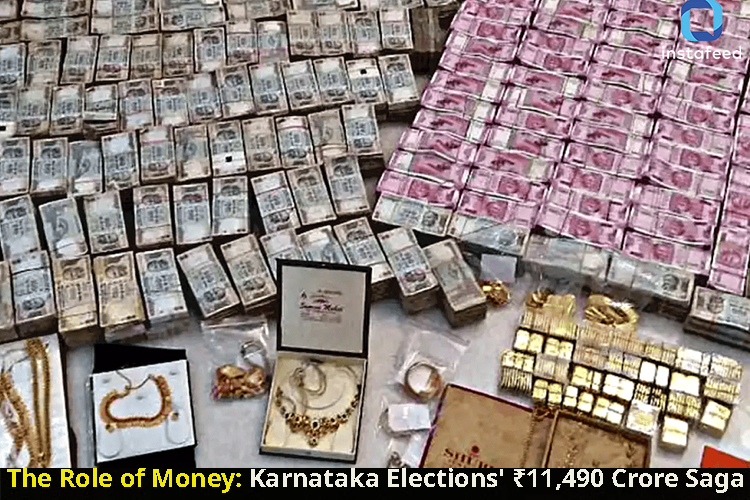
The recently concluded elections to the Karnataka state assembly have garnered attention due to their exorbitant costs, potentially making them the most expensive state assembly elections in India. Although concrete figures are lacking, various indicators and anecdotal evidence suggest the immense amount of money invested in these elections. The prevalence of wealthy candidates and the normalization of election spending have led to a perception that financial resources often outweigh ideas and ideologies in determining electoral outcomes.
Wealthy Candidates Dominate the Field
The Association for Democratic Reforms' Election Watch revealed striking statistics from the Karnataka elections, highlighting the dominance of millionaire candidates. Approximately 97% of the winning candidates were crorepatis (multi-millionaires), consistent with the figures from the previous election in 2018. The average assets of elected legislators surged to ₹64.39 crore, nearly doubling since 2018. Both Congress and BJP fielded candidates with substantial assets, and independents weren't far behind. This trend underscores the preference for financially well-off candidates, possibly diminishing the role of ideas and ideology.
Candidates' Enormous Expenditures
The high prevalence of wealthy candidates correlates with substantial campaign expenditures. By analyzing the average spending of major party candidates in different constituencies, it's estimated that each candidate spent around ₹25 crore. Some high-profile constituencies reportedly witnessed candidates spending triple this amount. Extrapolating from these figures, the cumulative expenditure for the entire election could touch ₹11,490 crore. However, these calculations might not include the expenses incurred indirectly by political parties, such as those related to strategists and publicists, further complicating the financial landscape.
Voter Incentives and Shrinking Victory Margins
An interesting aspect emerges when considering voter incentives. Allegations of voters receiving money for their votes, combined with shrinking victory margins in Indian elections, suggest a higher expenditure in closely contested races. The competitive nature of elections has led to a decrease in victory margins over the years. The Karnataka polls exhibited a similar trend, with only a few candidates securing significant margins. This evolving landscape impacts both the nature and extent of election spending.
Corruption Narratives and Democracy's Paradox
The election narrative in Karnataka was dominated by corruption allegations, with the Congress highlighting the BJP's alleged graft. However, the prevalence of wealthy candidates and massive election spending raises questions about the credibility of such corruption claims. The intertwining of identity issues and financial resources in elections prompts concerns about the inclusivity of democracy. Paradoxically, candidates accused of corruption often succeed, and the financial aspect seems to overshadow allegations of impropriety.In conclusion, the Karnataka state assembly elections have set a new benchmark for costly electoral campaigns. The presence of affluent candidates, coupled with extensive spending, has brought to the forefront the influence of money in politics. This phenomenon challenges the conventional belief that elections are primarily determined by ideas and ideology. Instead, it highlights the complex interplay between financial resources, identity issues, and the dynamics of democracy.



Comments
Add a Comment:
No comments available.