


Story Content
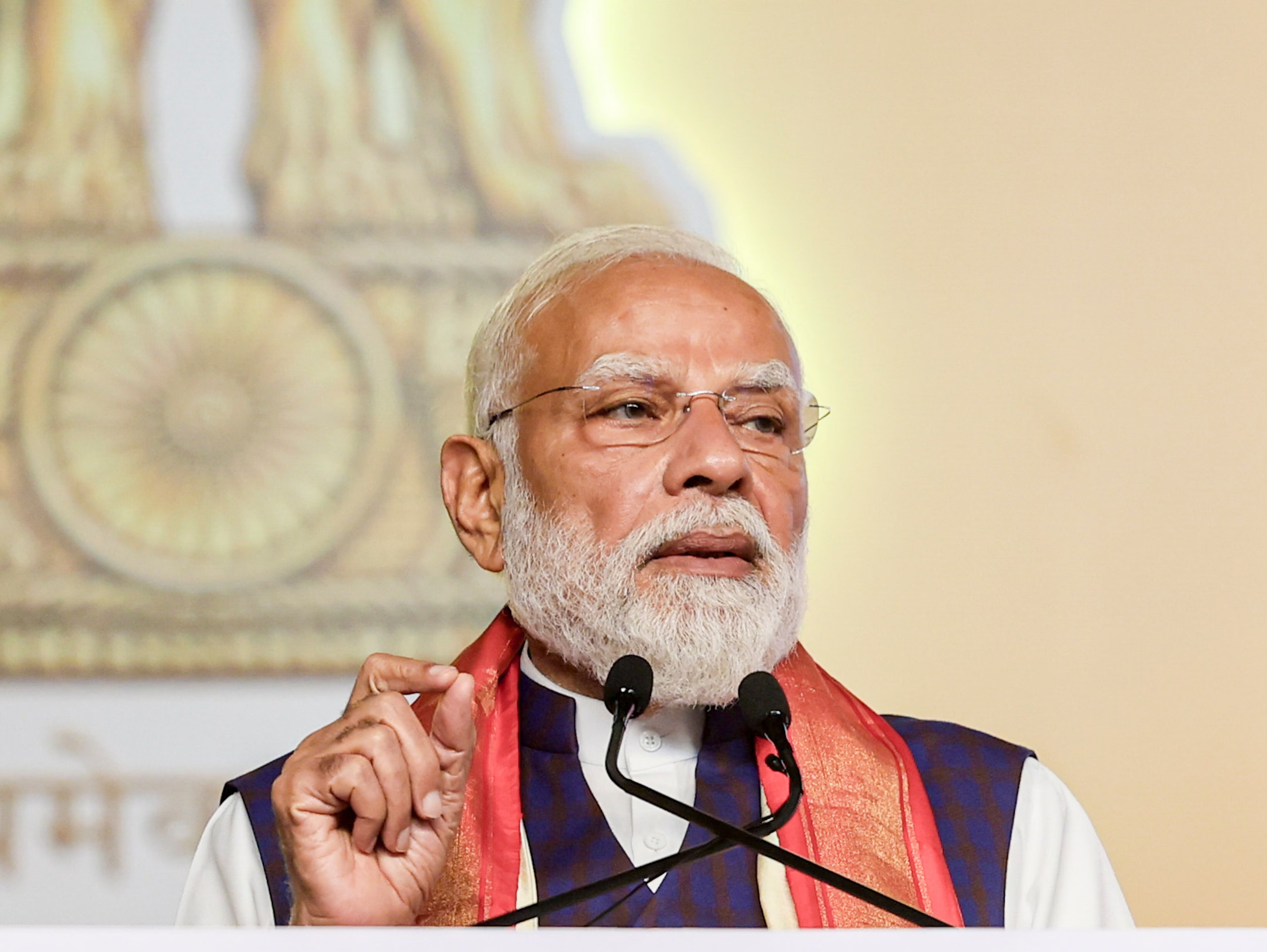
Recently, PM Narendra Modi appealed to citizens of India, warning them against purchasing gold for at least a year for weddings and functions to safeguard their economy. The calculation is simple: In FY26, India imported roughly $72 billion of gold, which is a 24% rise, thus making it the second-largest item in the import bill after oil.
All gold that is bought from abroad is a foreign exchange drain—there is very little gold produced in India. This increases the Current Account Deficit (CAD) in the range of $84.5 billion or ~2% of GDP in 2026, as predicted by the IMF. A higher CAD exerts downward pressure on the rupee and raises forex reserves, but recently they were in danger of falling to approximately $691 billion due to the world uncertainties triggered by the tensions in West Asia during the rising crude oil prices.
In contrast to essential oil imports, gold demand is a discretionary one. Its cut would save crores of rupees in monetary losses, stabilize the rupee, and improve the BoP position to a greater extent. Modi's message is that she dishes out voluntary austerity to protect the economy from disruptive external forces without policy measures. Culturally sensitive, it caught the eye of the crucial role macroeconomics places on the cost of gold in forex-stressed times.



Comments
Add a Comment:
No comments available.