


Story Content
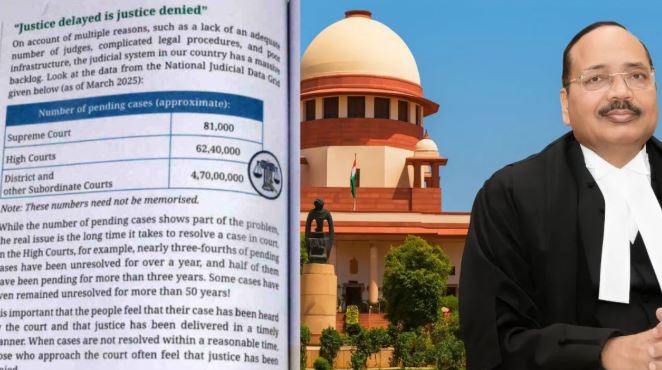
According to high-ranking government and NCERT officials, the National Council of Educational Research and Training (NCERT) is about to gouge out a self-declared offensive passage on the subject of corruption in the judiciary in its recently published Class 8 Social Science textbook Exploring Society: India and Beyond (Vol-II).
The following aspects were identified in the chapter called The role of the judiciary in our society; corruption at different levels of the judiciary; the huge cases pending to be heard (referring to over 81,000 pending cases within the Supreme Court, 6.2 million in the high courts, and almost 47 million cases in the district courts); and lack of judges. It also cited a July 2025 comment of former Chief Justice of India B.R. Gavai, who said that cases of corruption and misconduct have adversely affected the trust of people in the institution.
The materials caused a strong backlash. On February 25, 2026, the process was concluded under suo motu by the Supreme Court, headed by Chief Justice Surya Kant, of a reference to an alleged comprehensive, well-planned conspiracy to impugn the judiciary and an apparently skewed and discriminatory attack that overpink. The court characterized it as a calculated action to subvert the integrity of the judiciary, prohibited publication, reprinting, and electronic circulation of the book, seized the existing copies, and sent show-cause notices to NCERT officials on allegations of contempt.
NCERT later apologized for the content of the text and its mistake of judgement and discontinued distribution of the e-version, removing the chapter a few hours later from its website, and assured that it would be rewritten in consultation with authorities to be released in the 2026-27 academic year.
Education Minister Dharmendra Pradhan promised to follow the instructions of the court. Government sources had called the section not suitable for school students, and inspirational material should be given the first priority.
The episode has rekindled the discussion on curriculum legislation, judicial delicacy, and the institution of school education. Analysts state that the fast clearing is concerning because of the subjective debate on the systemic problems, and its advocates regard it as preserving the judicial integrity. The revised textbook should be available shortly in accordance with the concerns of the court.



Comments
Add a Comment:
No comments available.