


Story Content
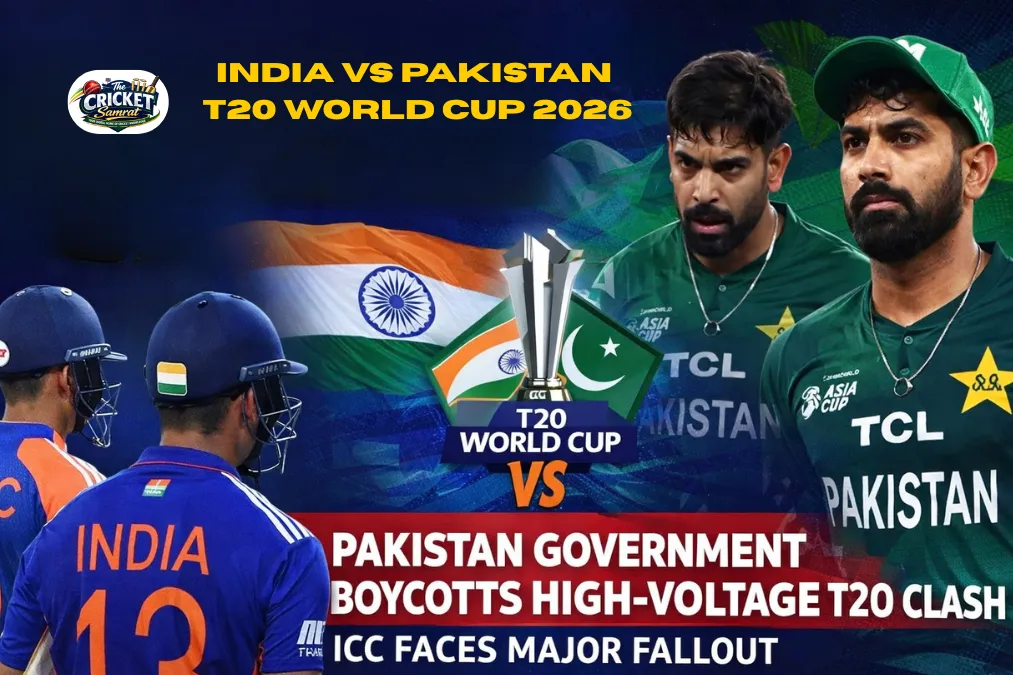
The viral information spread on social media websites such as Instagram, Threads, and Facebook claims that the Pakistan Cricket Board (PCB) has a net worth of approximately 600 crore of rupees, and a possible boycott of the high-profile India vs. Pakistan match in the ongoing T20 World Cup 2026 could lead to a huge financial penalty or loss of up to 2300 crore of rupees, which is about four times higher than the estimated worth of the board.
This story has gone viral, with articles presenting it as a rough economic reality slap: one boycott choice. An almost 4x risk premium to their net worth. Cricket is not only played on the field—there are losses that are made on paper. The amount of 2300 crore is frequently directly related to the prevailing commercial worth of an IND vs PAK match, especially in the form of broadcasting, advertising, sponsorships, and worldwide audience.
The Background: Squabbles on the Border on the Boycott.
The drama is based on the move by Pakistan, through an official government statement, to take part in the tournament but not to take part in the T20 World Cup 2026 group stage match they had against India due on February 15, 2026, in Colombo. It followed against the background of unremitting geopolitical tensions, such as India declining to fly to Pakistan to have the Champions Trophy in 2025 (resulting in a hybrid model, with matches relocated to Dubai). Pakistan alleged the ICC was taking a one-sided position and, in its defense, cited the issue of security, which had been raised by Bangladesh in its previous requests to host the games.
The ICC made it very clear that there would be severe and long-term consequences of international cricket, urging the PCB to reach a mutually agreeable solution and highlighting that fans, stakeholders, and the ecosystem of the sport were also affected, such as millions of people in Pakistan.
Breaking Down the Numbers
Financial Health/Net Worth of PCB: Social media estimates it to be 600 crore (approximately 70-75 million USD). Current sources on PCB give reliable estimates that have a net worth/assets of 2025-2026 of 450-580 crore (approximately 55-70 million USD) and an annual revenue of approximately PKR 10 billion (around 300-400 crore or 35-40 million USD). ICC continues to be a significant source of revenue (up to 50 percent in certain years), and India-based matches also bring in a lot of revenue to the world of cricket.
The 2300 Crore Number: It is not a specific fine by the ICC but is merely an approximate value of the overall commercial value of the match, which is commonly quoted at 250-300 million USD (2000-2500 crore). It includes:
Large losses in ad revenues to the broadcasters (e.g., JioStar values the media rights deal of the IND-PAK games).
Sponsorship hits.
ICC revenue risks (disrupted media/sponsorship loses major part of revenue: 250-540 million).
Claims of potential broadcaster lawsuits or compensation claims against ICC/PCB.
In case the ICC finds Pakistan guilty of breach of contract (i.e., loss without a sound force majeure defense), the PCB may be liable to:
Annual ICC revenue share loss (between $38 million and more in the 2024-27 cycle, between $144 million and more in the cycle).
Stricter sanctions such as cutting off future funding, exclusion from events, or legal indemnity/damages.
Immediate broadcaster claims (reports state that there may be lawsuits of up to $38-42 million).
The difference between the two matches was pointed out by former ICC communications official Sami-ul-Hasan Burney: a single match could earn the world $250 million, whereas PCB is earning about 35.5 million a year.
Possible Final Results and Interests.
The ICC has advocated discussion and threats of losing points and net run rate fines to more substantial financial or constitutional measures. Pakistan cites political/government directives (akin to the former Indian position) as being able to invoke force majeure and only be liable to match forfeiture and not enormous penalties.
But the boycott has the risk of tearing apart the commercial structure of cricket. IND-PAK confrontations create massive viewership and finances, which means the system as a whole, including the associate countries. In the case of PCB, which is already grappling with domestic issues, the economic inference may be disastrous and may lead to the collapse of the money pools that depend on ICC distributions (dependent greatly on BCCI/India revenue).
Concisely, the amount of the so-called fine of 2300 crore is more of a viral enlargement of the overall match value/losses than a credible penalty; however, the basic idea remains: the financial risk that PCB will take by boycotting this rivalry game is colossal and much greater than its balance sheet at a time when the biggest matches in the cricket calendar are also the biggest revenue-generating matches.
The importance of this saga is that geopolitics keeps banging into the billion-dollar business aspect of the sport, and the fans are caught in the middle of it all across the world.



Comments
Add a Comment:
No comments available.