


Story Content
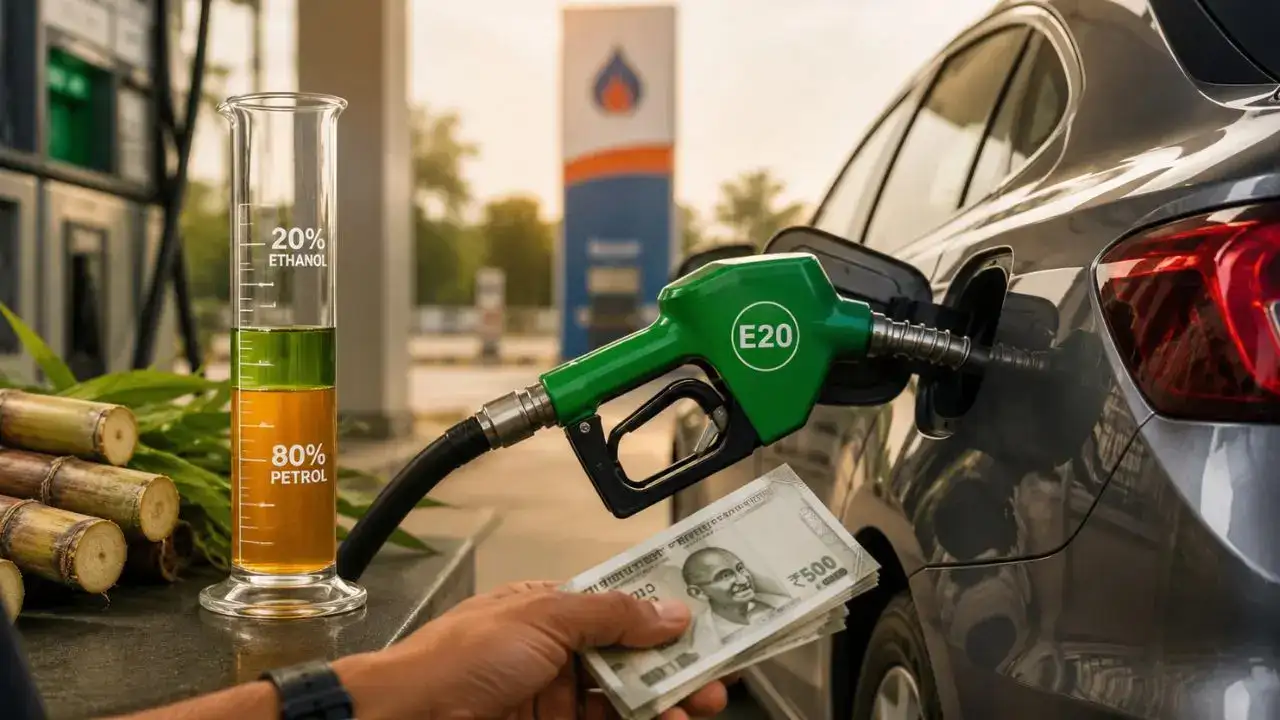
The Indian government has clarified why E20 ethanol-blended petrol is priced similarly to or higher than conventional petrol or E10, despite the push for higher ethanol blending. According to the Ministry of Petroleum and Natural Gas, E20 is currently more expensive to produce than pure petrol under prevailing market conditions.
The primary reason is the administered pricing for ethanol, procured at remunerative rates to support farmers. Maize-based ethanol costs around ₹71.86 per litre (excluding GST, transportation, storage, and handling), while crude oil trades around $70 per barrel. This makes blending costlier than refining pure petrol.
The Ethanol Blended Petrol (EBP) programme aims for energy security, reduced imports, farmer income support, and lower emissions rather than immediate pump price reductions. Savings on foreign exchange and environmental benefits are highlighted as long-term gains.
The ministry noted that E20 offers higher octane and better performance in compatible vehicles but may reduce mileage slightly. Offering multiple fuel grades (pure petrol, E10, E20) across stations was ruled out due to logistical challenges. E20 remains the standard blend as the programme advances toward higher targets.



Comments
Add a Comment:
No comments available.